Is Your Business Ready for AI? An Honest Readiness Assessment
Around nine in ten teams are not ready for AI, and the reason is rarely the model. Here is how to answer "is my business ready for AI?" across data, stack, outcome clarity and adoption.
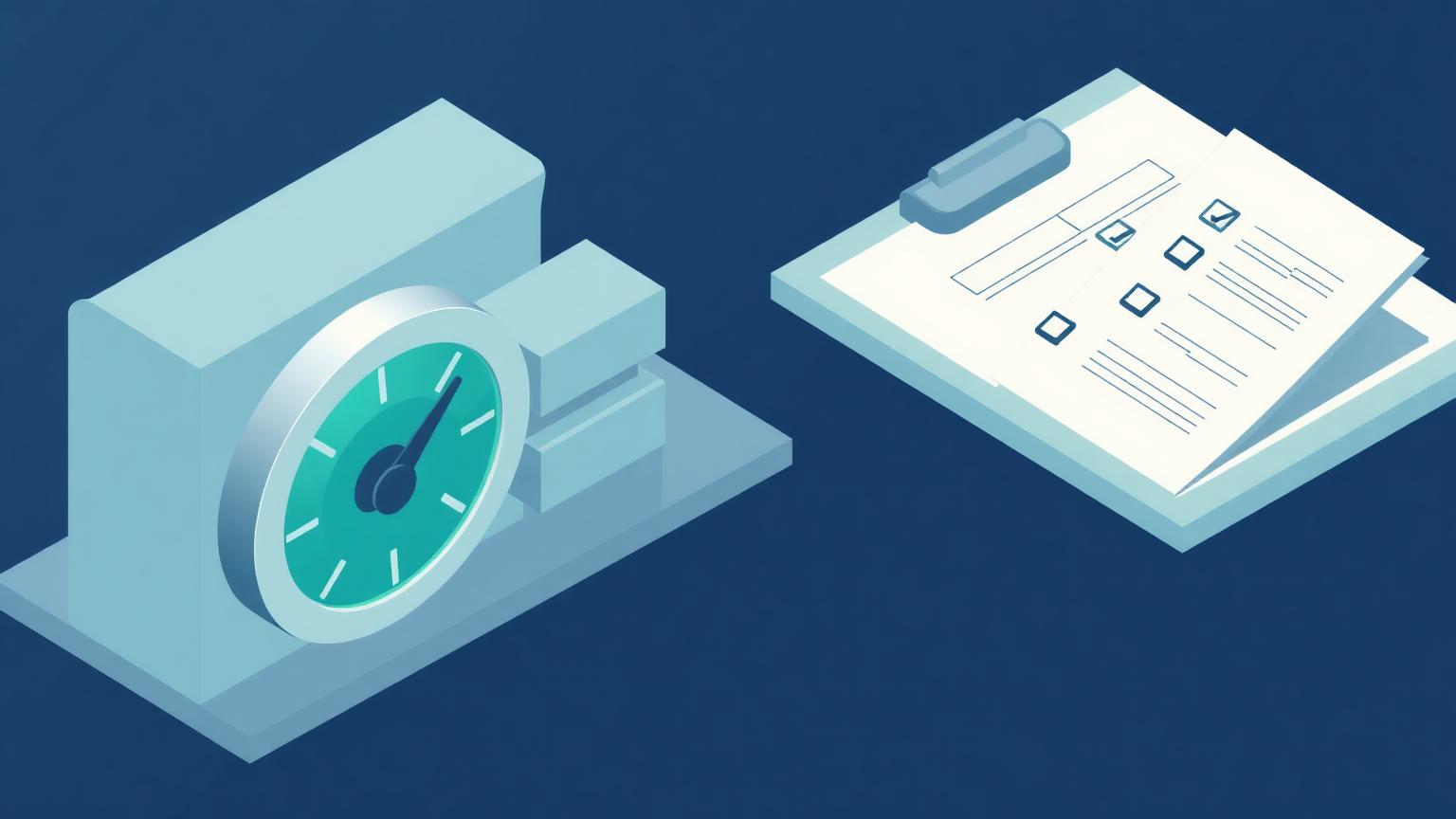
Is your business ready for AI? Most teams asking whether they should add AI are asking the wrong question first.
The better question is whether the foundation underneath the tool can support it. In our experience roughly nine in ten teams are not ready, and the reason is almost never the model; it is the data and the operating rigour around it.
What is an AI readiness assessment?
It is a structured review of whether your data, workflows, and team can support an AI project before you fund one. It scores foundations, not enthusiasm.
A good answer to "is your business ready for AI?" covers four areas: the state of your data, the specific outcome you want, how your tools connect, and whether your people will actually use what gets built.
It is deliberately unglamorous. Nothing in this review predicts which model will be best next quarter, because that is not what determines whether the project works.
What it does predict is failure. Teams that score poorly and proceed anyway tend to spend six months building something that produces confident answers from data nobody trusts.

Why are most teams not ready for AI?
Usually because the data has never been cleaned, and cleaning it requires operational rigour nobody has scheduled. That is the honest answer for the large majority of small and mid-sized companies.
Neglected foundations look the same everywhere. Duplicate contact records, fields that mean different things to different teams, a CRM where half the pipeline data was entered under an old process and never reconciled.
Point a model at that and you get hallucinations grounded in your own mess. The output is confident, well written, and wrong in ways that are hard to spot until someone acts on it.
There is a second, quieter blocker. Many teams cannot state the outcome they want in a measurable sentence. Without that, there is nothing to compare results against, and the return on the investment becomes a matter of opinion.
Garbage in, confident garbage out. If you are asking is your business ready for AI, the data answer comes first. If your data is not normalized and current, the best use of the next quarter is fixing that rather than buying a model.
What questions belong in a readiness assessment?
Questions about your data, your bottleneck, your stack, and your team's habits. The specific wording matters less than covering all four honestly.
Our own assessment works through these areas:
Context. Who you are, which department you work in, and how large the team or organization is. Readiness looks different at five people than at five hundred.
Outcome. The exact result you want AI to produce. If that awareness does not exist before the project starts, any judgment about return is subjective afterwards.
Time and bottlenecks. How much time goes to manual, repetitive work, and which single manual bottleneck causes the biggest drag today.
Stack architecture. How many tools are in play, and whether you are confident data flows accurately between them.
Adoption. How often people already use AI tools, what would block them, which tools the team has adopted, and how comfortable they are directing a model toward useful work.
Coverage. What share of the organization actively uses these tools, because value only shows up at wide adoption rather than in isolated pockets.
Friction. How frustrated the team is with repetitive work, and the single biggest thing keeping them from getting more out of what they already have.
Plan. Whether there is a hypothesis for the outcome, a realistic timeline, and a concrete budget for tooling.
That last group separates serious projects from exploratory ones. Teams without a timeline tend to push the start date indefinitely, and teams without a hypothesis cannot tell success from noise.

How do you know if your data is ready?
Ask the people who maintain your data whether it is fresh or needs work, then listen to how they describe their week. Their answer is more reliable than any dashboard.
There is a useful signal in that conversation. If your data people are casually providing support when something breaks, the pipelines are stable enough to build on. If they are actively rebuilding connections between systems, the ground is still moving.
You also need someone who can read the data, not just move it. Spotting the story underneath a dataset ( i.e. why a field is empty, or why a segment behaves differently) is a judgment skill, and no tool replaces it.
Practical checks that take less than a day:
- Pull fifty records at random from your CRM and check how many are complete and current.
- Ask two teams to define the same field and compare answers.
- Trace one customer from first touch to invoice across every system that holds them.
- Count how many places a customer email address is stored, and which one is authoritative.
If any of these produce a surprise, that surprise is your first project, and it tells you more about whether your business is ready for AI than any vendor demo will.
How should you score your own readiness?
Score each area separately and let the weakest one set your timeline. A strong score on adoption does not compensate for data nobody trusts.
A workable scoring frame:
- Data quality. Not ready means never audited. Ready means clean, owned and current.
- Outcome clarity. Not ready means "use AI somewhere". Ready means a measurable hypothesis.
- Stack integration. Not ready means manual exports. Ready means verified data flow.
- Team adoption. Not ready means isolated experiments. Ready means broad daily use.
- Ownership. Not ready means nobody named. Ready means one accountable owner.
Read the scores honestly and the sequence writes itself. Whichever column your weakest area falls in is where the next ninety days should go.
You can run our free AI readiness assessment and get a scored result across these areas in a few minutes. It asks the same questions we would ask in a first call.
For teams whose weakest score lands on data, the work usually starts in the Customer Relationship Management (CRM) layer, because that is where the customer record lives and where inconsistency does the most damage downstream.

What does the first ninety days after scoring look like?
Once you know whether your business is ready for AI, pick the lowest-scoring area and fix exactly one thing inside it. A single completed improvement beats a broad programme that never finishes.
If data quality scored lowest, the first project is almost always deduplication and field standardization inside one system. Not every system (and not every field), but the ones that feed the use case you care about.
If outcome clarity scored lowest, the work is a written hypothesis with a number in it. Something like: this process takes eleven hours a week today, and we expect to cut it to four within a quarter.
If adoption scored lowest, the project is enablement rather than engineering. Pick the two people who will use the tool most, get them fluent, and let the rest of the team learn from watching a colleague rather than a vendor demo.
A realistic first quarter:
- Weeks one and two. Audit and benchmark, producing a written baseline for the target process.
- Weeks three to six. Fix the weakest foundation, whether that is clean data or a documented workflow.
- Weeks seven to ten. Run a narrow pilot: one use case, one team, measured against the baseline.
- Weeks eleven and twelve. Review and decide whether to expand, adjust, or stop.
The review at the end is the part that gets skipped. Without it, a pilot quietly becomes production and nobody ever establishes whether it worked.
Keep the scope small enough that the answer is unambiguous. Ambiguous results are the main reason second projects never get funded.
What do teams ask before running an assessment?
The same handful of questions come up every time.
How long does readiness work take?
Data cleanup is usually weeks, not months, if it is scoped to one system and one use case. It becomes a multi-quarter project when teams try to fix everything at once.
Can we start a pilot while we clean the data?
Yes, if the pilot uses a narrow, verified dataset. The failure mode is piloting against the messy data and drawing conclusions from it.
Does this apply to a five-person company?
It applies more, not less. Small teams feel a bad implementation immediately because there is no slack to absorb it.
What if leadership wants AI now?
Show them the score. Answering "is your business ready for AI" with evidence beats debating it. A scored, specific answer moves the conversation from enthusiasm to sequencing faster than an opinion does.
Which tools should we look at first?
Whichever ones address your single biggest bottleneck. The AI & Generative Tools category is a reasonable starting point once the bottleneck is named.
What should happen after the assessment?
Take the lowest score and turn it into one scoped project with a benchmark and a date. That is the entire method, and it works precisely because it refuses to do everything at once.
Is your business ready for AI today? Whatever the answer, readiness is not a gate you pass once. It is a state you maintain, and the teams that treat it that way are the ones still getting value from AI two years after the pilot.